
Stem Cell Therapy for Parkinson’s Disease: What You Need to Know
Parkinson’s disease is a progressive neurological disorder that mainly affects movement, balance, and coordination. Symptoms usually develop gradually and can make everyday activities increasingly challenging.
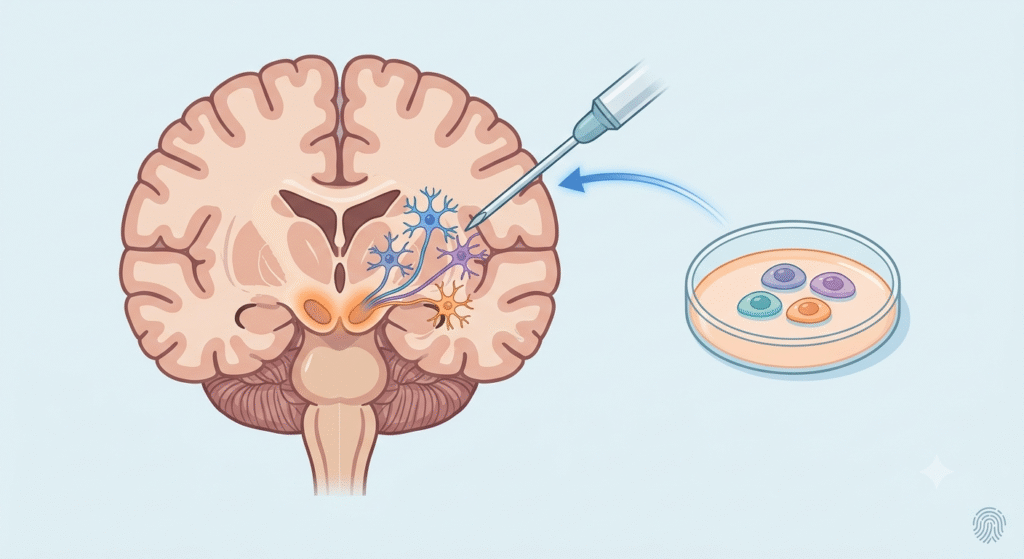
Advances in regenerative medicine have led researchers to investigate stem cell-based therapies for Parkinson’s disease. This research focuses particularly on understanding whether stem-cell-derived nerve cells could help replace or support dopamine-producing neurons affected by the condition.
Table of Contents
Understanding Parkinson’s Disease
Parkinson’s disease occurs when nerve cells in an area of the brain responsible for movement become damaged or die. Many of these cells produce dopamine, an important chemical messenger that helps coordinate smooth and controlled movement.
As dopamine levels decrease, individuals may experience movement-related symptoms along with other physical and cognitive changes.
What Are the Common Symptoms?
Parkinson’s disease affects each person differently, and symptoms may gradually change as the condition progresses. Common signs include:
- Tremors or shaking, particularly in the hands
- Muscle stiffness and rigidity
- Slow movement
- Difficulty walking
- Balance and coordination problems
- Changes in speech
- Changes in handwriting
- Sleep disturbances and fatigue
Early medical evaluation can help identify symptoms and determine an appropriate care and management plan.
What Causes Parkinson’s Disease?
The exact cause of Parkinson’s disease is not completely understood. It is believed that several factors may contribute to its development, including age-related changes, genetic factors, and environmental influences.
The progressive loss of dopamine-producing neurons is one of the key biological features associated with the condition.
What Is Stem Cell Therapy?
Stem cells have the ability to develop into different specialized cell types. Because of this unique ability, scientists are studying their potential applications in regenerative medicine and neurological disorders.
In Parkinson’s disease research, scientists are particularly interested in whether stem cells can be developed into dopamine-producing nerve cells that may potentially replace cells lost due to the disease.
How Is Stem Cell Therapy Being Studied for Parkinson’s Disease?
Researchers are investigating whether laboratory-developed dopamine-producing neurons derived from stem cells can be transplanted into specific areas of the brain.
The goal of this research is to determine whether these cells can survive, function appropriately, produce dopamine, and potentially help improve certain symptoms.
Early-stage clinical research has produced encouraging scientific developments, but further studies are required to understand long-term safety, effectiveness, appropriate patient selection, and potential risks.
Stem cell therapy should therefore not be presented as a proven cure for Parkinson’s disease.
Potential Areas of Regenerative Medicine Research
Research into stem-cell-based approaches for Parkinson’s disease is exploring several potential areas, including:
Supporting Dopamine-Producing Cells: Researchers are investigating ways to replace or support nerve cells responsible for producing dopamine.
Supporting Motor Function: Studies are evaluating whether cell-based approaches could potentially improve certain movement-related symptoms.
Neural Repair and Regeneration: Regenerative medicine research aims to better understand how damaged neurological tissues may be repaired or supported.
Personalized Treatment Research: Scientists continue to explore approaches that may eventually allow treatments to be better tailored to individual patient needs.
These are areas of ongoing research, and individual treatment outcomes cannot be guaranteed.
Who May Be Considered for Stem Cell-Based Treatment?
There is no single stem cell approach suitable for every person with Parkinson’s disease.
A patient’s suitability for an investigational treatment or clinical study may depend on factors such as:
- Age and overall health
- Stage and progression of Parkinson’s disease
- Severity and type of symptoms
- Current medications and treatment response
- Other medical conditions
- Eligibility requirements of a specific clinical protocol
A detailed evaluation by qualified medical professionals is essential before considering any experimental or regenerative medicine approach.
Current Treatment and Support for Parkinson’s Disease
While research continues, established Parkinson’s disease management typically focuses on controlling symptoms and maintaining independence and quality of life.
Treatment may include medications that affect dopamine activity, physiotherapy, occupational therapy, speech and language therapy, regular exercise, nutritional guidance, and ongoing neurological care.
Patients should not stop or modify prescribed Parkinson’s medications when considering complementary or investigational approaches unless advised by their treating physician.
Why Is Research in Regenerative Medicine Important?
Parkinson’s disease involves the progressive loss of specific nerve cells, making cell replacement an important area of scientific interest.
Researchers around the world continue to study stem-cell-derived neurons and other regenerative approaches to better understand whether damaged or lost neurological functions can eventually be restored.
While significant progress has been made, rigorous clinical trials remain essential before new therapies can become established treatments.
Frequently Asked Questions
Can stem cell therapy cure Parkinson’s disease?
Currently, stem cell therapy is not an established cure for Parkinson’s disease. Stem-cell-based treatments are being studied through ongoing research and clinical trials.
Can stem cells replace damaged brain cells?
Researchers are investigating whether stem cells can be developed into specialized dopamine-producing neurons that could potentially replace some of the cells lost in Parkinson’s disease.
Is stem cell therapy safe for Parkinson’s disease?
Safety depends on the specific cell type, treatment method, clinical protocol, and individual patient. Some approaches remain experimental, so patients should discuss potential benefits and risks with qualified medical professionals.
How do I know if I am eligible?
Eligibility depends on your medical history, symptoms, disease progression, overall health, and the specific treatment or clinical research protocol being considered. A comprehensive medical evaluation is necessary.
Book a Consultation
If you would like to learn more about Parkinson’s disease, regenerative medicine research, and available care options, contact Stem Medica India for more information and a personalized consultation.