Stem Cell Therapy for Autism: Evidence, Safety & Research in India
Last medically reviewed: August 2026
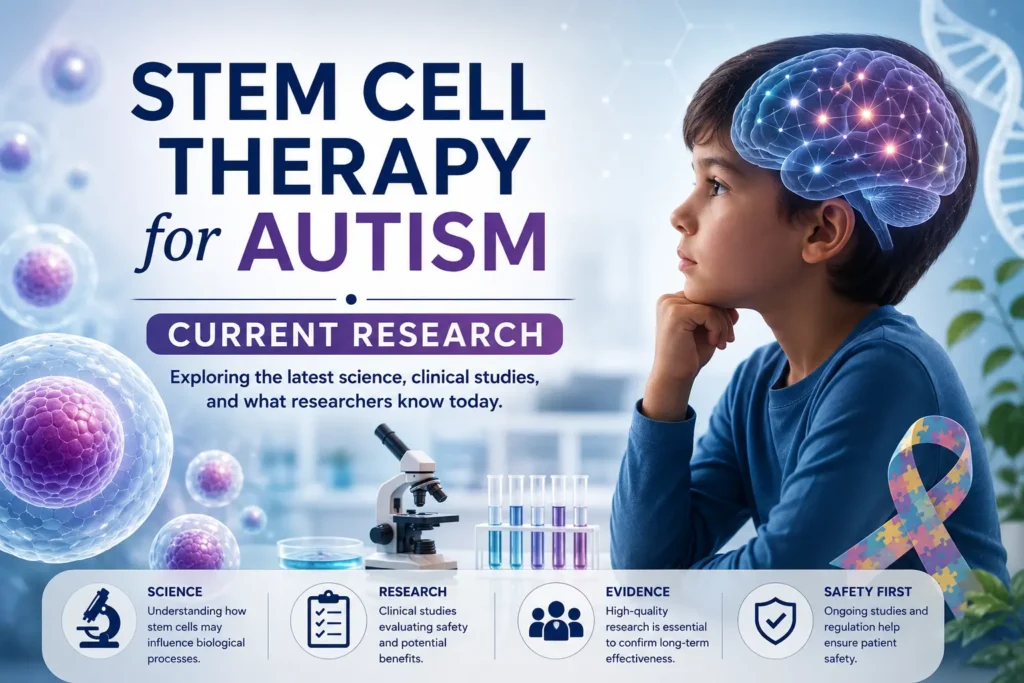
Stem cell therapy for autism is an area of ongoing medical research. Researchers are studying whether certain cell-based approaches may influence biological processes associated with autism spectrum disorder (ASD). However, current evidence does not establish stem cell therapy as a proven cure or routine treatment for autism.
Autism is a neurodevelopmental condition, and each autistic child can have different strengths, challenges and support needs. Current autism support may include behavioral, developmental, speech, occupational, educational and other individualized interventions.
If you are researching stem cell therapy for autism in India, it is important to understand what current research shows, the potential risks and uncertainties, clinical-trial requirements, the regulatory position in India, and what questions families should ask before considering an investigational treatment.
This guide explains the current evidence, types of stem cells being studied, potential safety considerations, clinical trials, costs and important questions to consider.
Quick Answer: Is Stem Cell Therapy a Proven Treatment for Autism?
No. Stem cell therapy is not currently established as a proven cure or routine treatment for autism.
Researchers are studying different cell-based approaches, including mesenchymal stromal/stem cells, but studies vary in cell type, treatment protocol, dose, administration route and outcome measures.
Families considering stem cell therapy for autism should understand the difference between clinical research and routine medical treatment, review the available evidence, understand potential risks and verify the regulatory status of any proposed treatmen
Table of Contents
What Is Autism Spectrum Disorder?
Autism spectrum disorder is a developmental condition that can influence how a person communicates, interacts with others, learns and responds to their surroundings.
Some children may experience speech and communication difficulties, while others may have challenges with social interaction, repetitive behaviors, sensory processing or changes in routine.
Autism is called a spectrum because its characteristics and support needs vary considerably from one person to another.
There is currently no single treatment that works in the same way for every autistic child. Support is generally based on the individual’s developmental, behavioral, communication and educational needs.
What Is Stem Cell Therapy?
Stem cells are cells that have the ability to develop into different types of cells or influence biological processes in the body.
Stem cell-based therapies are being investigated for several medical conditions. Researchers are particularly interested in mesenchymal stromal/stem cells (MSCs) because of their potential effects on immune signaling, inflammation and communication between cells.
However, the fact that stem cells are being studied for a particular condition does not mean that a stem cell treatment has been proven to work for that condition.
The type of cells used, how they are prepared, the dose, route of administration, treatment protocol and characteristics of the patient can all affect the results.
That is why stem cell treatment for autism should be discussed in the context of scientific research rather than presented as a guaranteed cure.
Why Is Stem Cell Therapy Being Studied for Autism?
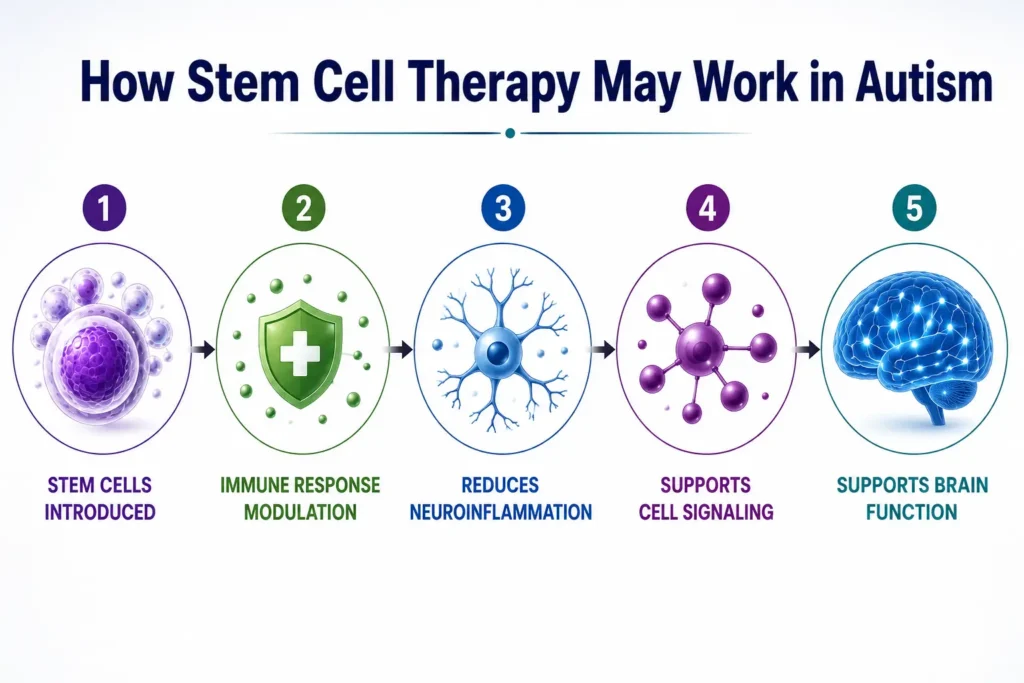
Researchers are investigating whether some biological processes associated with autism could potentially be influenced by cell-based therapies.
Areas of research include:
- Neuroinflammation
- Immune-system regulation
- Cellular signaling
- Communication between cells
- Brain microenvironment
- Neurodevelopmental pathways
The idea behind this research is not that stem cells simply “replace damaged brain cells.” Autism is much more complex than that.
Instead, researchers are studying whether certain cells or cell-derived products may influence biological signaling and the environment in which brain cells function.
These mechanisms remain areas of research. They should not be interpreted as proof that stem cell therapy can reverse or cure autism.
Can Stem Cells Cure Autism?
No established scientific evidence currently shows that stem cell therapy can cure autism.
This is one of the most important points for parents searching for autism stem cell treatment.
Autism is a complex neurodevelopmental condition, and there is no established stem cell treatment that can guarantee a cure or permanent reversal of autism.
Some research studies have reported improvements in selected measurements following cell-based interventions, but studies differ considerably in design, cell type, dose, route of administration and outcome measures.
For that reason, an improvement reported in one study cannot automatically be used to predict how another child will respond.
Parents should be especially cautious about claims such as:
- “100% cure”
- “Permanent cure”
- “Guaranteed improvement”
- “One-time treatment”
- “Works for every child”
A responsible medical discussion should explain both what is known and what remains uncertain.
What Does Current Research Show About Stem Cell Therapy for Autism?
Research into stem cell therapy for autism is ongoing, but the available evidence remains limited and heterogeneous.
Studies have investigated different cell-based approaches, including mesenchymal stromal/stem cells. However, studies differ in participant characteristics, cell sources, treatment protocols, administration routes, outcome measures and follow-up periods.
Some studies have reported changes in selected clinical or behavioral measures, but positive findings from individual studies do not establish stem cell therapy as an effective routine treatment for autism.
The quality of evidence also matters. Larger, well-controlled and longer-term studies are needed to determine whether any observed changes are clinically meaningful and whether potential benefits outweigh risks.
Researchers have investigated different cell-based approaches for autism, including studies involving mesenchymal stromal/stem cells.
The research is interesting, but it is still developing.
A recent review of MSC-based research published in 2026 described encouraging preclinical findings and early clinical research, while also highlighting important challenges such as small sample sizes, differences between study designs, open-label studies, treatment standardization, dose selection and the need for longer-term evidence.
Individual clinical trials also need to be interpreted carefully.
For example, one randomized controlled study involving 32 children compared intrathecal autologous bone-marrow-derived MSC treatment combined with rehabilitation and medication with rehabilitation and medication alone. Although some measures changed over time, the study did not demonstrate significant differences between groups across several primary measures.
This is why it is not appropriate to take a positive finding from one study and describe stem cell therapy as a proven treatment.
What researchers still need to understand
More research is needed to determine:
- Which children, if any, might benefit
- Which type of cells should be studied
- The appropriate dose
- The safest route of administration
- How often treatment should be given
- Which outcome measures are most meaningful
- How long any changes last
- Long-term safety
- Whether observed improvements are clinically significant
- How cell-based approaches compare with established autism interventions
What Types of Stem Cells Are Studied for Autism?
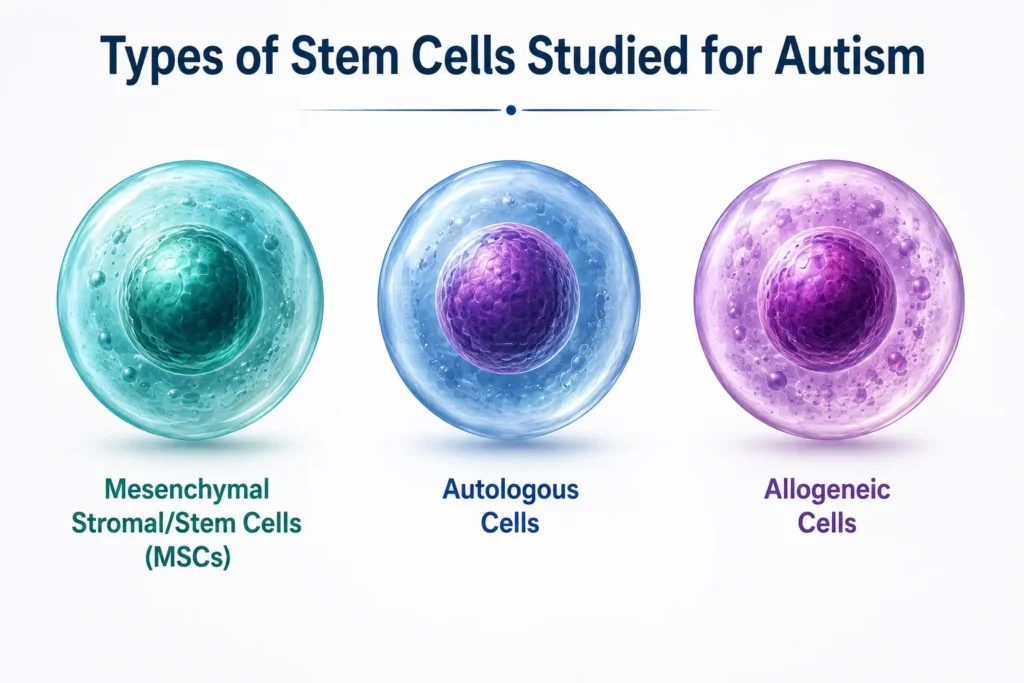
Different research programs may use different cell sources and protocols.
Mesenchymal stromal/stem cells
Mesenchymal stromal/stem cells, commonly referred to as MSCs, are among the cell types being investigated for autism.
Researchers are interested in MSCs partly because of their potential immunomodulatory and signaling effects.
However, being studied does not mean that MSC therapy has been established as an effective treatment for autism.
Autologous and allogeneic cells
Two terms you may encounter when researching stem cell treatment are autologous and allogeneic.
Autologous cells are obtained from the same patient receiving the treatment.
Allogeneic cells are obtained from a donor.
These approaches have different practical and biological considerations. Parents should ask a provider exactly what type of cells are being proposed and why that particular approach is being used.
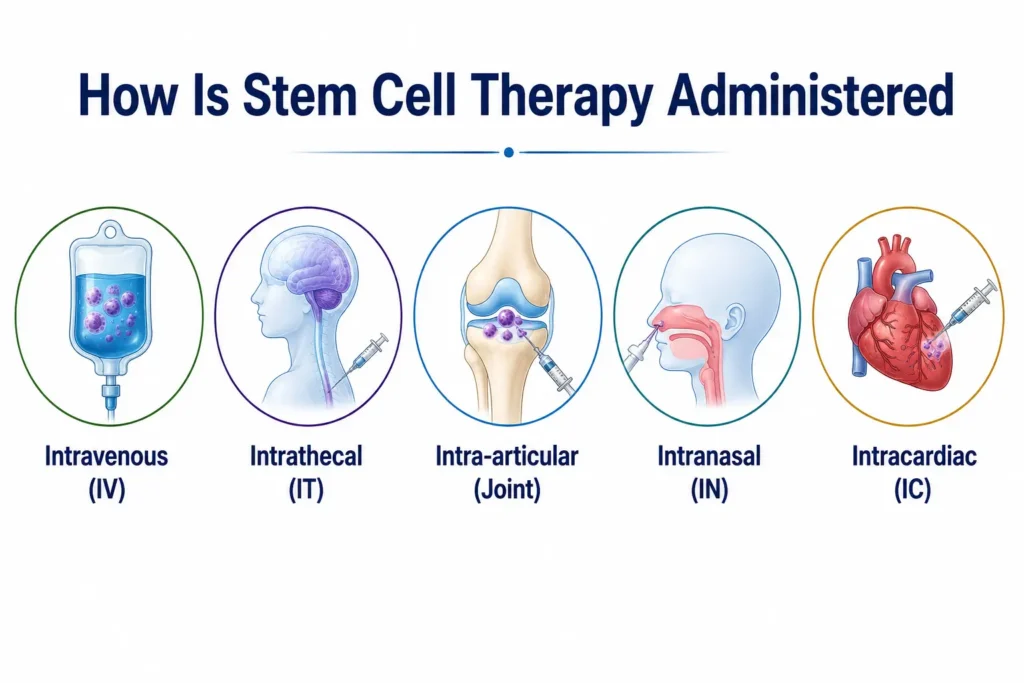
How Is Stem Cell Therapy Administered?
Research protocols can differ in how cells are administered.
Depending on the study, researchers may investigate routes such as:
- Intravenous administration
- Intrathecal administration
- Other investigational routes
The route matters because it can affect how cells or cell-derived products interact with the body.
It is therefore not meaningful to compare two “stem cell treatments” simply because both use stem cells. The cell source, preparation, dose, route and overall protocol may be completely different.
This is one reason why research findings cannot easily be combined into a single success percentage.
What Is the Success Rate of Stem Cell Therapy for Autism?
There is currently no scientifically established success rate that can reliably predict whether a child with autism will benefit from stem cell therapy.
You may find clinics or websites reporting high percentages of improvement. Parents should ask how those numbers were calculated.
Important questions include:
- How many patients were included?
- Was there a control group?
- Was the study randomized?
- Who assessed the outcome?
- What outcome scale was used?
- How long were patients followed?
- Were improvements statistically significant?
- Were the results published in a peer-reviewed journal?
A parent may notice changes in communication, sleep, attention or behavior after a treatment, but personal experience alone cannot establish that stem cells caused the improvement.
This is why stem cell therapy for autism success rate should be discussed carefully rather than reduced to one percentage.
What Treatments Are Currently Recommended for Autism?
Established autism support generally focuses on the individual child’s needs.
Depending on the child, support may include:
- Behavioral interventions
- Speech and language therapy
- Occupational therapy
- Educational support
- Social and communication interventions
- Psychological support
- Support for associated symptoms when clinically appropriate
These approaches are not necessarily competing with research into regenerative medicine.
If a family is considering an investigational treatment, established therapies should not automatically be stopped.
Parents should discuss any major treatment change with the child’s qualified healthcare professionals.
Stem Cell Therapy vs Established Autism Therapies
It is helpful to understand the difference between established support and investigational approaches.
| Approach | Main purpose | Current position |
|---|---|---|
| Speech and language therapy | Communication and language skills | Established support |
| Occupational therapy | Daily living, motor and sensory skills | Established support |
| Behavioral interventions | Learning, communication and behavior | Established support |
| Educational support | Learning and development | Individualized support |
| Stem cell therapy | Investigational biological approach | Research setting |
The key difference is the strength of evidence.
Established interventions have a much larger body of evidence supporting their use in autism care. Stem cell approaches remain an area of clinical research.
How Much Does Stem Cell Therapy for Autism Cost in India?
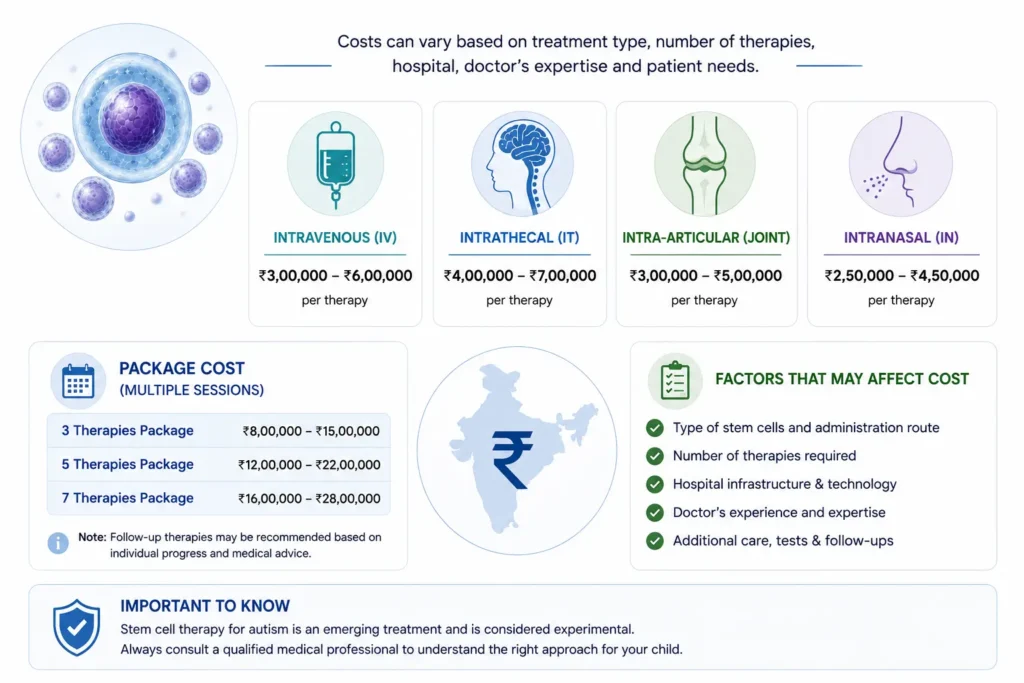
There is no single standard price for stem cell treatment for autism in India.
The cost can vary depending on several factors, including:
- Type and source of cells
- Cell processing
- Number of procedures
- Route of administration
- Medical evaluation
- Hospital or clinical charges
- Rehabilitation and supportive services
- Follow-up requirements
- Travel and accommodation
A very low price does not necessarily mean better value, and a high price does not prove that a treatment is more effective.
Families should ask for a complete written breakdown of what is included before making any financial decision.
Most importantly, cost should not be considered separately from evidence, safety and regulatory status.
Is Stem Cell Therapy Approved for Autism in India?
This is a particularly important question for families searching for stem cell therapy for autism in India.
ICMR has published an evidence-based assessment of stem cell therapy for autism and lists the therapy among areas where evidence must be carefully evaluated rather than treated as an established routine treatment.
In addition, the legal position in India changed significantly in January 2026.
Current Regulatory Position in India
On January 30, 2026, the Supreme Court of India decided Yash Charitable Trust & Ors. v. Union of India & Ors., a case concerning the promotion and administration of stem cell therapy for autism.
The Court held that stem cell therapies for autism cannot be offered as routine or commercial clinical treatment outside an approved and monitored clinical-trial or research setting. It also emphasized that patient consent does not by itself make an unproven treatment an appropriate clinical service.
For parents, the practical message is important:
The fact that a clinic advertises stem cell therapy for autism does not mean that the treatment is an approved routine therapy.
If a treatment is being described as research or a clinical trial, families should verify the trial and its regulatory status rather than relying only on promotional material.
Clinical Trial vs Commercial Treatment
There is an important difference between participating in a properly approved clinical trial and paying for an unproven treatment marketed as a routine medical service.
A clinical trial is designed to answer specific research questions under defined protocols and oversight.
Before considering participation, parents should ask:
- Is the study officially registered?
- What is the study’s purpose?
- What cells are being used?
- What is the treatment protocol?
- Who is responsible for medical monitoring?
- What are the known and potential risks?
- What happens if there is no improvement?
- How long will follow-up continue?
- What costs are involved?
- What happens if a treatment-related complication occurs?
These questions help families distinguish genuine research from marketing language.
Is Stem Cell Therapy Safe for Autism?
Safety depends on the specific treatment.
A stem cell procedure is not one standardized treatment. Different products and administration methods can have different risks.
Potential concerns with unproven cell-based procedures may include:
- Infection
- Immune reactions
- Complications related to administration
- Unexpected biological effects
- Procedure-related complications
- Unknown long-term effects
Parents should ask for a clear explanation of both short-term and long-term risks.
Be cautious if a provider focuses heavily on benefits but gives little information about possible complications.
What Parents Should Know Before Considering Stem Cell Therapy for Autism
- Stem cell therapy is not a guaranteed cure for autism.
- Research findings from one study cannot predict an individual child’s outcome.
- Different cell types and treatment protocols are not interchangeable.
- Families should understand potential risks and uncertainties.
- Parents should verify whether a proposed treatment is part of an appropriately approved clinical trial.
- Established developmental and supportive therapies should not be stopped without appropriate medical guidance.
- Claims of “100% cure” or guaranteed improvement should be treated with caution.
How Should Parents Evaluate a Stem Cell Clinic?
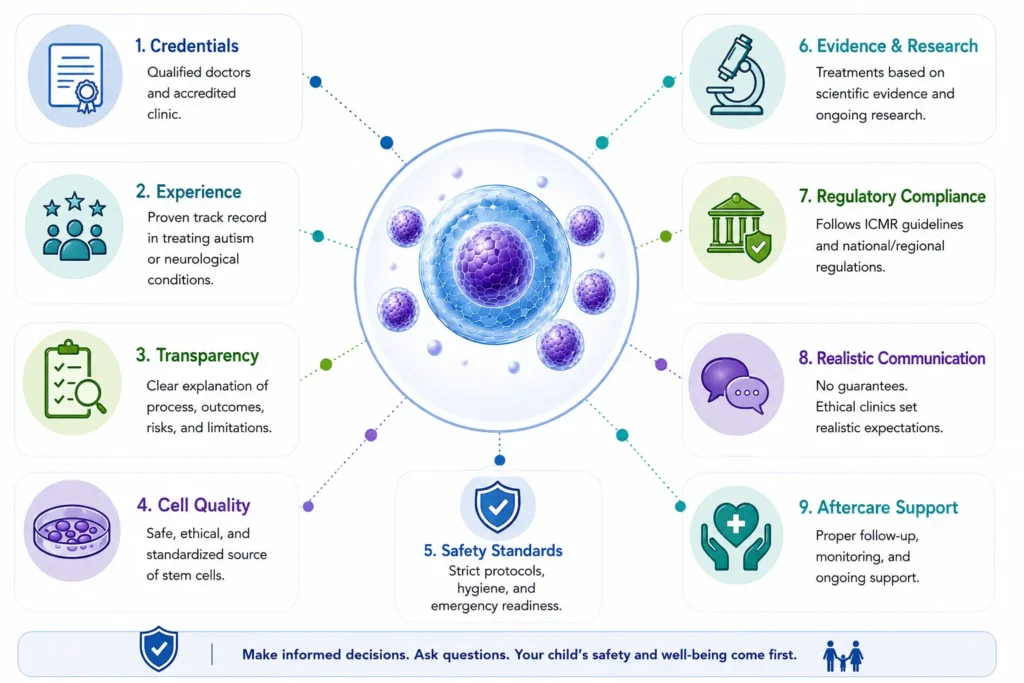
If you are researching stem cell therapy for an autistic child, take time to evaluate the provider.
1. Ask about the medical team
Find out who will assess and treat the child and what their relevant qualifications are.
2. Ask what cells are being used
The provider should be able to clearly explain the cell source and type.
3. Ask for scientific evidence
Look for peer-reviewed research rather than relying only on testimonials or clinic brochures.
4. Ask about regulatory status
If the procedure is described as a clinical trial, ask for the relevant registration and approval information.
5. Understand the risks
A responsible provider should explain potential risks rather than promising only positive outcomes.
6. Ask about follow-up
Find out who will monitor the child after the procedure and for how long.
7. Ask what happens if there is no improvement
A realistic treatment discussion should include the possibility that the expected outcome may not occur.
10 Red Flags Parents Should Watch For
Families should be particularly careful when a provider:
- Guarantees a cure.
- Promises results for every child.
- Uses “100% success” claims without credible evidence.
- Refuses to explain the cell source.
- Cannot provide peer-reviewed research.
- Does not clearly explain risks.
- Pressures families to make an immediate payment.
- Uses testimonials as the main evidence of effectiveness.
- Avoids questions about regulatory status.
- Suggests stopping established therapies without appropriate medical guidance.
Hope is understandable when a child is facing developmental challenges. But a major medical decision should be based on clear information rather than promises.
Questions Parents Should Ask Before Considering Treatment
Before making a decision, consider asking the treating team:
What exactly is being administered?
Where do the cells come from?
How are the cells prepared and tested?
What evidence supports this specific protocol?
Has this exact protocol been studied in children with autism?
What are the known risks?
What are the possible long-term risks?
Is this treatment part of an approved clinical trial?
How will improvement be measured?
What happens if the child does not improve?
Will the child continue speech, occupational or behavioral therapy?
A provider should be comfortable answering these questions clearly.
Can Stem Cell Therapy Replace ABA, Speech or Occupational Therapy?
There is currently no basis for treating stem cell therapy as a replacement for established autism support.
Speech therapy, occupational therapy, behavioral interventions and educational support address different developmental needs.
If a family is considering an investigational cell-based approach, they should discuss the decision with their child’s healthcare team rather than stopping established therapies independently.
What Should Parents Expect From Autism Treatment?
Every child is different, so it is difficult to predict exactly how an individual will respond to any intervention.
A useful approach is to focus on measurable and realistic goals.
For example, instead of expecting a treatment to “cure autism,” families and clinicians may discuss specific functional goals such as:
- Communication
- Social participation
- Daily living skills
- Learning
- Sleep
- Behavior
- Sensory challenges
These goals should be assessed using appropriate clinical or developmental measures.
Most importantly, parents should be given enough information to make an informed decision without pressure.
Why More Research Is Still Needed
The scientific interest in stem cell therapy for autism is real, but so are the unanswered questions.
Researchers need larger and better-designed studies with appropriate control groups, standardized treatment protocols and longer follow-up.
Future research needs to establish not only whether a treatment produces measurable changes, but whether those changes are meaningful to children and families.
Researchers also need to understand which patients might benefit, which cell types and doses are appropriate, and how to monitor long-term safety.
Until those questions are answered, it is more accurate to describe stem cell therapy for autism as an investigational area of research rather than a proven cure.
Frequently Asked Questions
Is stem cell therapy a cure for autism?
No. There is currently insufficient evidence to consider stem cell therapy a cure or routine treatment for autism.
Is stem cell therapy approved for autism in India?
Stem cell therapy is not an established routine treatment for autism in India. The Supreme Court’s January 2026 judgment held that such therapy cannot be offered as routine or commercial clinical treatment outside an approved and monitored clinical-trial or research setting.
Can stem cells improve autism symptoms?
Researchers are studying this possibility, and some studies have reported changes in selected outcomes. However, current evidence is not sufficient to establish reliable clinical benefits for autism.
What is the success rate of stem cell therapy for autism?
There is no scientifically established success rate that can reliably predict how an individual child will respond. Research studies vary considerably in design, participants, treatment protocols and outcome measures.
What type of stem cells are studied for autism?
Mesenchymal stromal/stem cells are among the cell types being investigated. Studies may differ in cell source, preparation and administration method.
How much does stem cell therapy for autism cost in India?
There is no single standard cost. Pricing can depend on the cell type, preparation, procedure, medical evaluation, rehabilitation, follow-up and other services.
Is stem cell therapy safe for autistic children?
Safety depends on the specific cells, preparation, route of administration and clinical setting. Unproven cell-based procedures can carry medical risks, and long-term safety may not be fully understood.
Can stem cell therapy replace speech or occupational therapy?
No. Stem cell therapy should not be considered a replacement for established developmental, behavioral, speech, occupational or educational support.
Should parents stop behavioral therapy before stem cell treatment?
Parents should not stop established therapies on their own. Any change in a child’s treatment plan should be discussed with qualified healthcare professionals.
How can parents evaluate a stem cell therapy clinic in India?
Ask about the medical team, cell source, scientific evidence, clinical-trial status, regulatory requirements, risks, treatment protocol, follow-up and what happens if there is no improvement.
What is the best treatment for autism?
There is no single treatment that is best for every autistic person. Support should be individualized according to communication, developmental, behavioral, educational and other needs.
A Responsible Approach to Stem Cell Therapy for Autism
Stem cell research is an important area of modern medicine, and researchers continue to investigate whether cell-based approaches could eventually have a role in autism care.
At the same time, families need accurate information about what is known and what remains uncertain.
For parents considering stem cell therapy for autism in India, the most important steps are to understand the evidence, ask about safety, verify the regulatory status of any proposed treatment and discuss options with qualified medical professionals.
Stem cell therapy should not be presented as a guaranteed cure for autism.
At StemMedica India, families can discuss their individual circumstances with a medical team and learn about regenerative medicine, current research and available options.
The goal should always be informed decision-making, realistic expectations and patient safety.
Medical Disclaimer: This article is intended for educational purposes only and should not be considered a substitute for individualized medical advice, diagnosis or treatment. Families should consult qualified healthcare professionals before making decisions about any medical intervention.