
What Is Stem Cell Therapy? Complete Beginner’s Guide
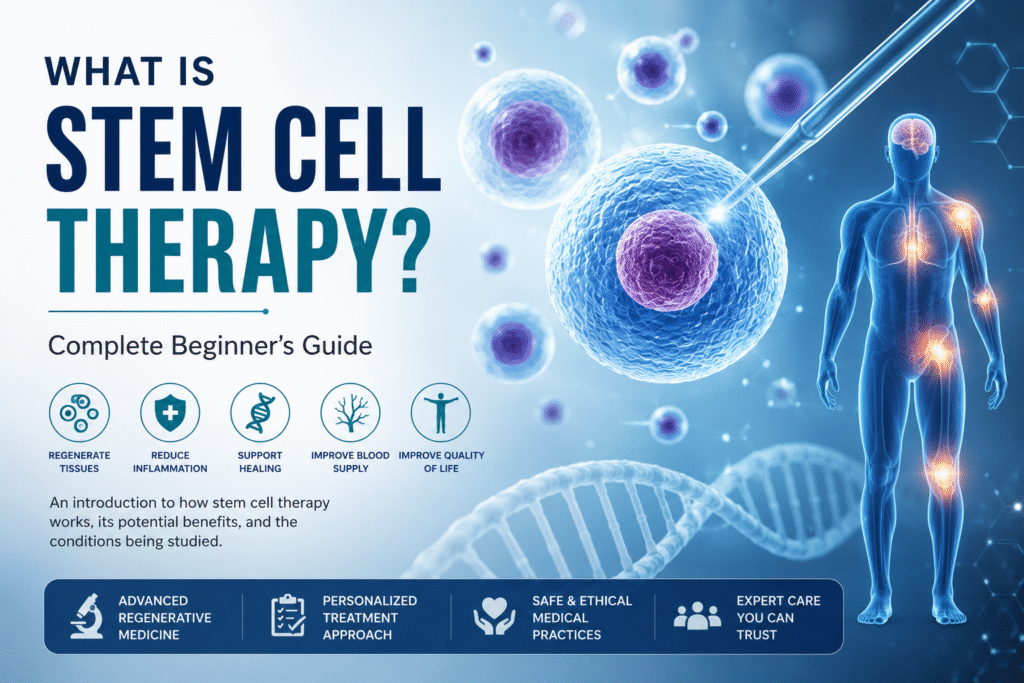
Stem cell therapy has become one of the most talked-about advancements in regenerative medicine. Researchers are studying its potential to support the body’s natural repair processes and explore new treatment approaches for a wide range of medical conditions. If you’re new to this topic, this beginner’s guide explains what stem cell therapy is, how it works, its potential applications, and what to expect before considering treatment.
Table of Contents
What Are Stem Cells?
Stem cells are unique cells that have the ability to develop into different specialized cell types. They also have the capacity to divide and produce more stem cells, helping maintain and repair certain tissues in the body.
Scientists continue to study how these cells may contribute to tissue regeneration and healing in various medical conditions.
Types of Stem Cells
1. Adult Stem Cells
Found in tissues such as bone marrow and fat, adult stem cells are commonly used in regenerative medicine research.
2. Umbilical Cord Stem Cells
Collected from donated umbilical cords after birth, these cells are being studied for their regenerative properties.
3. Embryonic Stem Cells
These cells have the ability to develop into many different cell types but involve ethical and regulatory considerations. Their use varies by country and research setting.
4. Induced Pluripotent Stem Cells (iPSCs)
Scientists create these cells by reprogramming adult cells in the laboratory. They are primarily used in research.
How Does Stem Cell Therapy Work?
Stem cell therapy involves introducing stem cells into the body with the goal of supporting tissue repair and regeneration.
Researchers are investigating whether stem cells may:
- Support tissue regeneration
- Reduce inflammation
- Promote healing
- Encourage formation of new blood vessels
- Release growth factors that assist repair
- Improve cellular communication
The exact effects may vary depending on the condition being treated and the treatment protocol.
Conditions Being Studied
Stem cell therapy is currently being researched for conditions including:
- Parkinson’s Disease
- Alzheimer’s Disease
- Stroke Recovery
- Autism Spectrum Disorder
- Multiple Sclerosis
- Spinal Cord Injury
- Osteoarthritis
- Diabetic Foot Ulcers
- COPD
- Liver Disease
- Kidney Disease
- Type 1 Diabetes
- Type 2 Diabetes
Research is ongoing, and effectiveness may differ among conditions.
Potential Benefits
Studies are exploring whether stem cell therapy may help:
- Support natural healing
- Improve tissue repair
- Reduce inflammation
- Promote blood vessel growth
- Improve mobility in some conditions
- Enhance quality of life for selected patients
Further research is needed to confirm long-term safety and effectiveness.
Who May Be a Candidate?
A specialist may evaluate individuals based on:
- Medical history
- Current diagnosis
- Overall health
- Previous treatments
- Severity of disease
- Treatment goals
Every patient requires an individualized assessment before treatment recommendations are made.
What Happens During Treatment?
Although protocols vary, treatment may include:
- Medical consultation
- Clinical evaluation
- Diagnostic testing
- Stem cell preparation
- Administration using the appropriate method
- Post-treatment monitoring
- Follow-up visits
Your healthcare provider will explain the specific process recommended for your condition.
Is Stem Cell Therapy Safe?
Safety depends on several factors, including:
- The source of the stem cells
- The medical condition
- The treatment protocol
- The expertise of the healthcare team
- Individual patient health
Patients should always consult qualified healthcare professionals before making treatment decisions.
Why Choose Stem Medica India?
At Stem Medica India, we are committed to patient-focused care through personalized consultations and advanced regenerative medicine approaches.
Our focus includes:
- Experienced medical specialists
- Personalized treatment plans
- Modern medical facilities
- Comprehensive patient evaluation
- Compassionate care
- Ongoing follow-up support
Frequently Asked Questions
Is stem cell therapy approved for every disease?
No. While stem cell therapy is established for certain medical uses, many other applications remain under clinical research or have varying regulatory status depending on the condition and country.
Does stem cell therapy cure diseases?
Stem cell therapy should not be considered a guaranteed cure. Researchers continue to study its potential benefits across different medical conditions.
How long does treatment take?
Treatment duration varies depending on the condition and the personalized treatment plan.
Can anyone receive stem cell therapy?
Eligibility depends on a detailed medical evaluation conducted by a qualified healthcare professional.
Conclusion
Stem cell therapy represents a promising area of regenerative medicine with ongoing research across many medical conditions. Although early findings are encouraging for some applications, patients should seek advice from qualified healthcare professionals to understand the potential benefits, limitations, and current evidence before making treatment decisions.
Book a Consultation
If you would like to learn more about stem cell therapy and whether it may be appropriate for your condition, schedule a consultation with the experienced team at Stem Medica India.