Is Stem Cell Therapy a Cure for Autism? What the Research Says
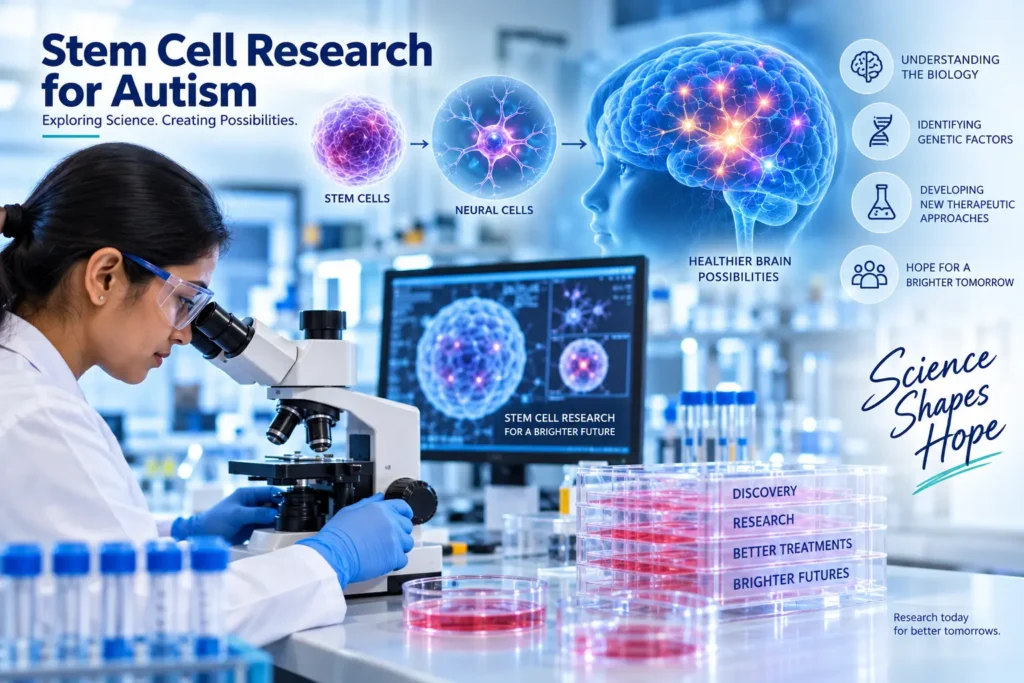
For parents and families living with Autism Spectrum Disorder (ASD), finding the right information about treatment can be challenging. After an autism diagnosis, it is natural to search for therapies that may improve communication, learning, behavior, development, or overall quality of life.
In recent years, stem cell therapy for autism has attracted increasing attention. Researchers are investigating whether stem cells and regenerative medicine could help us better understand some of the biological mechanisms associated with ASD and whether certain cell-based approaches could have therapeutic potential.
But an important question remains:
Is stem cell therapy a cure for autism?
Based on the evidence available today, stem cell therapy has not been established as a cure for Autism Spectrum Disorder. Research is ongoing, and clinical trials have produced mixed findings. While some studies have generated interest, more high-quality research is needed to determine whether specific stem cell treatments are safe, effective, and appropriate for people with autism.
Understanding what researchers currently know can help families make informed decisions and have productive discussions with qualified healthcare professionals.
Table of Contents
What Is Autism Spectrum Disorder?
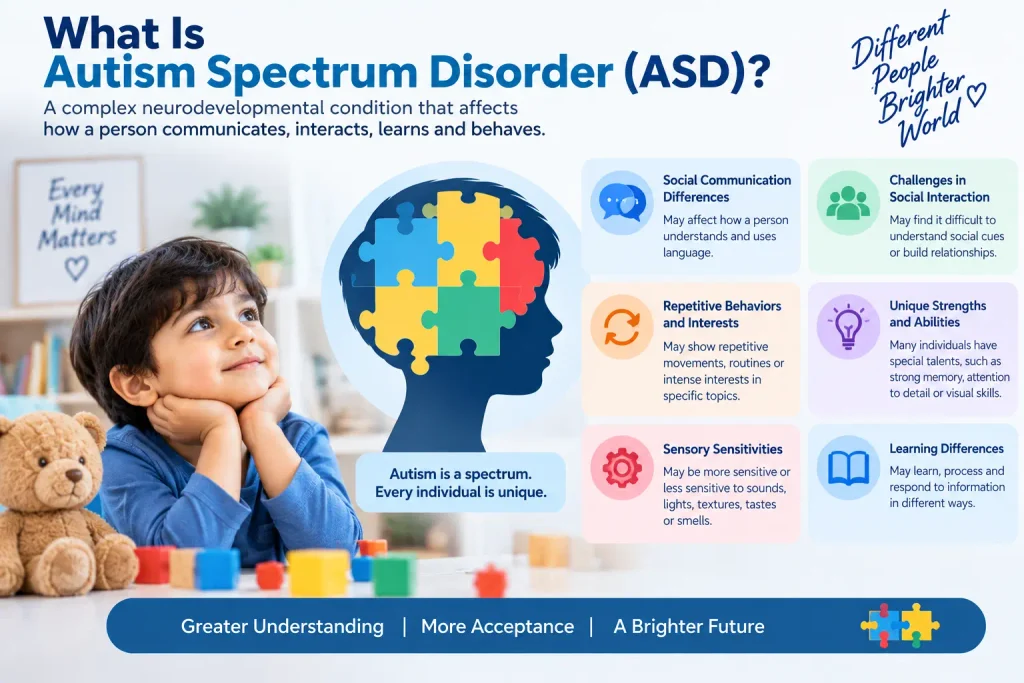
Autism Spectrum Disorder is a complex neurodevelopmental condition that can affect social communication, social interaction, behavior, sensory processing, learning, and everyday functioning.
Autism is called a “spectrum” because it affects individuals in very different ways. Some people may require significant support in daily life, while others may need support only in particular areas.
There is no single cause of autism.
Scientists believe ASD is associated with a combination of genetic and biological factors, together with other influences that can affect early brain development. Genetics plays an important role, but researchers are still working to understand how different genetic variations and biological pathways contribute to the development of ASD.
This complexity is one reason why there is unlikely to be one simple treatment that works in exactly the same way for every person with autism.
Understanding the Genetics of Autism
Genetic research has significantly changed our understanding of autism.
Rather than being caused by one specific gene, ASD can involve many different genetic variations. Researchers have identified a large number of genetic variants associated with an increased risk of autism.
These genetic changes can influence biological processes involved in brain development, communication between nerve cells, synaptic function, cellular metabolism, and other important processes.
However, having an autism-associated genetic variant does not automatically mean that a person will develop autism. Genetics is complex, and different combinations of genetic and other factors can influence development.
Researchers are now looking beyond individual genes and examining how genetic variations affect cells during early brain development.
This is where technologies such as induced pluripotent stem cells (iPSCs), neural progenitor cells, and brain organoids have become important research tools.
These technologies allow scientists to study aspects of human neurodevelopment in the laboratory and investigate how particular genetic changes may affect brain cells.
Mitochondrial Dysfunction and Autism
Another area of interest in autism research is mitochondrial function.
Mitochondria are structures inside cells that help produce the energy required for normal cellular activity. Because the brain has high energy demands, healthy mitochondrial function is important for normal neurological development and function.
Some research has identified mitochondrial abnormalities in subsets of people with autism. Scientists are investigating whether changes involving energy production, oxidative stress, calcium regulation, and other cellular processes could be associated with some features of ASD.
Recent research has examined a possible connection between RyR2 hyper-activation, mitochondrial calcium overload, oxidative stress, mitochondrial dysfunction, and dopamine regulation.
The study suggests that excessive RyR2 activation may contribute to mitochondrial calcium overload and oxidative stress-related changes, potentially affecting dopamine regulation and autism-related biological mechanisms.
These findings are scientifically interesting because they may help researchers understand how cellular processes could be involved in ASD.
However, it is important to understand what this type of research does—and does not—show.
Identifying a biological mechanism associated with autism does not automatically mean that treating that mechanism will cure autism. Laboratory findings are an important part of medical research, but they need to be followed by carefully designed clinical studies before a treatment can be considered established.
Reference: PMID 42574940
Cell Fitness and Genetic Variation in Autism Research
Researchers are also studying how genetic variations affect the ability of human cells to grow, survive, and develop.
During early brain development, neural progenitor cells play an important role in producing and developing different types of brain cells. Changes in the way these cells proliferate or mature could potentially influence neurodevelopment.
A newer research approach known as “cell village” fitness screening has been used to compare genetically distinct human neural progenitor cell (NPC) lines.
In this type of research, scientists can study groups of cells with different genetic backgrounds and examine differences in their growth and survival.
Research using this approach identified hyperproliferation in neural progenitor cells carrying the chromosome 16p11.2 deletion, a genetic alteration associated with autism risk.
The researchers also mapped common genetic variants near ZFHX3 that were associated with differences in neural progenitor cell proliferation.
Why is this important?
Research at the cellular level may help scientists understand why certain genetic changes are associated with differences in brain development. It could also help researchers identify biological pathways that may eventually become targets for new therapies.
For families, however, these findings should be viewed as part of the broader scientific investigation into autism—not as evidence that a particular stem cell treatment has already been proven to treat ASD.
Reference: PMID 42546692
USP15 Mutations and Neurodevelopment
Another emerging area of autism research involves the USP15 gene and the ubiquitin-proteasome pathway.
The ubiquitin-proteasome system helps cells control proteins by regulating their activity and removing proteins that are no longer needed. Because protein regulation is important for many cellular processes, changes in this system may affect development.
Researchers have identified rare damaging variants in USP15 in some individuals with ASD.
To better understand these variants, scientists have used genetically matched human induced pluripotent stem cells and brain organoids.
Brain organoids are three-dimensional laboratory-grown cellular models that can reproduce certain aspects of early human brain development. They do not represent a complete human brain, but they provide researchers with a valuable way to study developmental processes that cannot easily be examined directly in humans.
Research using USP15 mutant organoids identified genotype-dependent changes centered around neural progenitor cells during corticogenesis, the developmental process involved in formation of the cerebral cortex.
These findings add another piece to the complex picture of autism genetics and neurodevelopment.
They also demonstrate one of the important ways stem-cell technologies are being used in autism research—not necessarily as a treatment, but as a tool for understanding disease biology.
Reference: PMID 42526765
Stem Cell Therapy for Autism: What Does the Research Show?
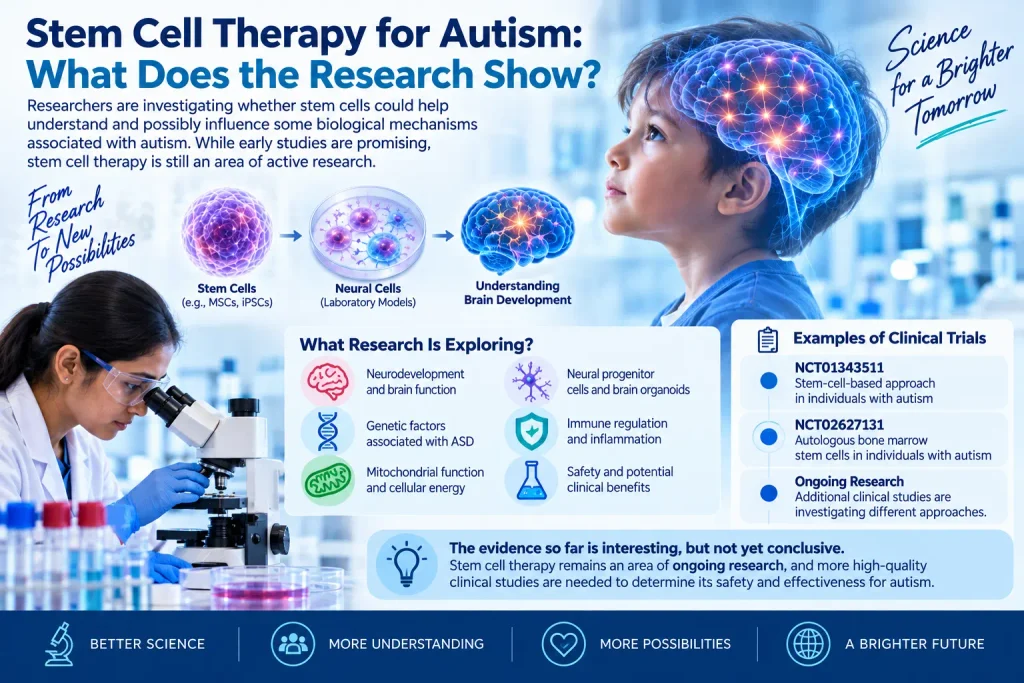
The interest in stem cell therapy for autism comes from the possibility that certain cell-based treatments could influence biological processes involved in neurological function.
Researchers have investigated different types of stem cells and different treatment approaches. Some studies have explored the use of cells derived from the patient’s own body, while other research has focused on understanding how stem cells can be used to model neurodevelopment in the laboratory.
Several clinical trials have investigated stem-cell-based approaches for ASD.
For example, NCT01343511 investigated a stem-cell-based approach in individuals with autism, while NCT02627131 examined an autologous bone marrow stem cell approach.
These studies are important because clinical trials help researchers determine whether a potential treatment is safe and whether it produces meaningful clinical benefits.
However, clinical research involving stem cells and autism has limitations.
Studies may differ in:
- The type of cells used
- How the cells are prepared
- How the treatment is administered
- Number of participants
- Participant characteristics
- Outcome measurements
- Follow-up duration
- Study design
Because of these differences, results from individual studies should be interpreted carefully.
At present, the available evidence does not justify describing stem cell therapy as a proven cure for autism.
How Could Stem Cells Potentially Help in Autism Research?
Stem cells are interesting to researchers because they can be studied in several different ways.
One major area is disease modeling.
Scientists can create induced pluripotent stem cells (iPSCs) from adult cells and then guide them toward becoming neural cells. These cells can retain important genetic characteristics of the individual from whom they were derived.
Researchers can then study how particular genetic variants affect neural development.
For example, they may investigate:
- How autism-associated genetic changes affect brain cells
- Whether certain genetic variants change cell growth
- How neural progenitor cells develop
- How neurons communicate with each other
- Whether specific cellular pathways are altered
- Which biological mechanisms could potentially become therapeutic targets
This approach could eventually contribute to more personalized research and treatment strategies.
But there is an important distinction:
Using stem cells to study autism is not the same as using stem cells to treat autism.
Stem-cell-based laboratory models are already valuable research tools. Whether cell-based therapies can provide safe and meaningful clinical benefits for people with ASD remains an active area of investigation.
What Are Brain Organoids and Why Are They Important?
Brain organoids are another development in stem-cell research.
Researchers can use iPSCs to create three-dimensional cellular structures that reproduce some characteristics of early brain development.
These models allow scientists to study processes such as neural progenitor cell behavior, cell differentiation, and aspects of brain development.
For autism research, brain organoids can be particularly useful when scientists want to understand how specific genetic variants influence developing neural cells.
The USP15 research described earlier is one example of how these models can be used to investigate genetic changes associated with ASD.
However, brain organoids have limitations.
They do not reproduce every aspect of a human brain, and they cannot fully represent the social, behavioral, developmental, and environmental complexity of autism.
Therefore, findings from organoid research are valuable for understanding biological mechanisms, but they cannot by themselves demonstrate that a treatment will work in a person.
What Have Autism Stem Cell Clinical Trials Found?
Clinical trials are essential for determining whether a potential treatment is safe and effective.
In the field of autism and stem cell therapy, researchers have conducted studies investigating different cell-based approaches.
Some early research has generated interest in possible biological or behavioral changes. However, the evidence remains limited and inconsistent enough that stem cell therapy cannot currently be considered a proven treatment or cure for ASD.
This distinction is especially important for families searching online for autism treatments.
A clinical trial means that researchers are investigating a treatment. It does not necessarily mean that the treatment has been proven to work.
A promising laboratory finding may take years to move through different stages of research before scientists understand:
- Whether the treatment is safe
- Whether it provides meaningful benefits
- Which patients may benefit
- What dose or treatment protocol is appropriate
- How long benefits may last
- What short-term and long-term risks may exist
This process is important because treatments involving cells can be complex, and long-term safety needs careful evaluation.
Stem Cell Therapy vs. Established Autism Care
When discussing stem cell therapy for autism, it is important not to confuse experimental research with established care.
Autism support is generally individualized. Depending on the person’s needs, care may involve developmental, behavioral, educational, communication, occupational, or other supportive approaches.
These interventions are designed around the individual’s specific strengths, challenges, and goals.
Stem cell therapy, on the other hand, remains an area of clinical investigation for autism.
Families considering an experimental treatment should speak with qualified healthcare professionals and carefully review the evidence before making decisions.
It is also important not to stop established treatment or support without discussing the decision with the appropriate healthcare professionals.
Could Genetics Lead to More Personalized Autism Treatment?
One of the most exciting possibilities emerging from autism genetics research is the potential for more personalized approaches.
Autism is not a single biological condition with one underlying mechanism. Different individuals may have different genetic and biological factors contributing to their development and symptoms.
As scientists learn more about genetic variants, cellular pathways, mitochondrial function, neural progenitor cells, and brain development, they may eventually be able to identify biologically distinct subgroups within ASD.
This could potentially lead to more targeted treatment strategies.
Stem-cell-based research may contribute to this process by allowing scientists to study cells carrying particular genetic characteristics.
For example, iPSCs and brain organoids may help researchers understand why a specific genetic change affects neural development and whether a particular biological pathway could be modified.
This is an important area of future research, but it should not be confused with currently available personalized stem cell treatment for autism.
What About Gene Therapy for Autism?
Gene therapy is another developing area of research.
Because some forms of autism are associated with specific genetic variants, researchers are investigating whether certain genetic pathways could eventually be targeted therapeutically.
However, autism involves many different genes and biological pathways. A genetic finding does not automatically translate into an available gene therapy.
For some rare genetic conditions associated with autism features, researchers may be able to investigate specific molecular targets. But this is very different from having one gene therapy that can treat autism as a whole.
The future may involve highly targeted approaches for specific genetic or biological subgroups rather than one universal treatment.
Is Stem Cell Therapy a Cure for Autism?
No. Based on current evidence, stem cell therapy has not been established as a cure for Autism Spectrum Disorder.
This conclusion does not mean that stem cell research is unimportant.
Stem cells are already providing researchers with valuable tools for studying genetics, neurodevelopment, neural progenitor cells, brain organoids, and cellular mechanisms associated with ASD.
Clinical trials are also helping researchers investigate whether particular cell-based approaches could eventually have therapeutic value.
But there is a critical difference between promising research and proven treatment.
At this stage, stem cell therapy for autism should be viewed as an area of ongoing research rather than a guaranteed cure.
What Should Parents Consider Before Choosing Stem Cell Therapy for Autism?
Parents naturally want to explore every reasonable option when looking for support for their child.
If you are considering stem cell therapy for autism, take time to understand exactly what is being offered.
Questions worth asking a healthcare professional or clinical research team include:
- What type of stem cells are being used?
- Where do the cells come from?
- Is the treatment part of a registered clinical trial?
- What evidence supports the treatment?
- Has the treatment been tested in controlled clinical studies?
- What outcomes were measured?
- What are the known risks?
- What are the possible long-term risks?
- How long will follow-up continue?
- Is the treatment approved for this specific use?
- What established care should continue during the research?
Being willing to ask difficult questions is not a lack of hope. It is an important part of making a responsible healthcare decision.
The Future of Stem Cell Research in Autism
Autism research is becoming increasingly sophisticated.
Scientists are studying autism from many different perspectives, including genetics, mitochondrial function, cellular metabolism, neural development, immune signaling, protein regulation, and communication between brain cells.
Stem-cell-based technologies are helping researchers connect these areas.
The ability to create neural cells and brain organoids from iPSCs gives scientists new ways to investigate genetic differences and developmental processes.
At the same time, clinical trials are helping researchers determine whether laboratory discoveries can eventually translate into safe and effective treatments.
The future may bring new approaches based on an individual’s genetic and biological characteristics.
But medical science must follow evidence.
Before stem cell therapy can be considered an established treatment for autism, researchers need stronger evidence showing that specific approaches are safe, reproducible, and capable of producing meaningful benefits.
Frequently Asked Questions About Stem Cell Therapy for Autism
Can stem cell therapy cure autism?
There is currently not enough clinical evidence to conclude that stem cell therapy cures autism. Researchers continue to study different cell-based approaches, but they remain investigational for ASD.
Is stem cell therapy an established treatment for autism?
Stem cell therapy should not currently be presented as an established cure or standard treatment for autism. Families should discuss potential treatments with qualified healthcare professionals and carefully evaluate the available evidence.
Why are scientists studying stem cells in autism?
Stem cells, particularly iPSCs, allow researchers to create neural cells and laboratory models that carry specific genetic characteristics. This can help scientists study brain development and identify biological pathways associated with ASD.
Can stem cells reverse autism?
Current research does not provide sufficient evidence to claim that stem cells can reverse autism. Claims of guaranteed reversal or cure should be viewed carefully and discussed with a qualified medical professional.
What are brain organoids?
Brain organoids are three-dimensional laboratory-grown cellular models that reproduce some aspects of early brain development. They are useful research tools but do not represent a complete human brain.
Are there clinical trials for stem cell therapy and autism?
Yes. Researchers have conducted and continue to conduct clinical studies investigating different approaches related to stem cells and autism. Clinical trial registration numbers such as NCT01343511, NCT02627131, and other autism-related studies can help researchers and families identify specific studies.
Should parents stop existing autism treatment to try stem cell therapy?
Parents should not stop established care without discussing the decision with the child’s healthcare professionals. If an experimental therapy is being considered, clinicians can help families understand the potential benefits, risks, and alternatives.
Conclusion
The question “Is stem cell therapy a cure for autism?” deserves a careful and evidence-based answer.
At present, stem cell therapy has not been proven to cure Autism Spectrum Disorder. Research is still underway, and scientists are studying how stem cells, iPSCs, brain organoids, genetics, mitochondrial function, and other cellular mechanisms may improve our understanding of ASD.
The research is promising in terms of scientific discovery, but promising research should not be confused with established treatment.
For families, the most important step is to seek reliable information, work with qualified healthcare professionals, and carefully evaluate the evidence behind any proposed therapy.
As autism research continues to advance, stem-cell-based technologies may help scientists better understand the biological differences associated with ASD and potentially contribute to new treatment strategies in the future.
For now, the focus should remain on evidence, individualized care, safety, and realistic expectations.
References
- PMID: 42574940 — Research investigating RyR2 hyper-activation, mitochondrial calcium overload, oxidative stress-related mitochondrial dysfunction, dopamine regulation, and autism-related mechanisms.
- PMID: 42546692 — Research investigating neural progenitor cell fitness, chromosome 16p11.2 deletion, ZFHX3-associated genetic variation, and cell proliferation.
- PMID: 42526765 — Research investigating USP15 variants and neurodevelopment using human iPSC-derived brain organoid models.
- NCT01343511 — Clinical trial investigating a stem-cell-based approach in individuals with autism.
- NCT02627131 — Clinical study investigating autologous bone marrow stem cells in individuals with autism.
- NCT05480826 — Autism-related clinical research.
Medical Disclaimer
This article is provided for general educational and informational purposes only. It is not intended to replace medical diagnosis, treatment, or advice from a qualified healthcare professional.
Stem cell therapy for autism remains an area of ongoing research. Current research should not be interpreted as proof that a particular stem cell treatment can cure, reverse, or eliminate Autism Spectrum Disorder.
Anyone considering an investigational treatment or clinical trial should discuss the potential benefits, risks, alternatives, eligibility requirements, and uncertainties with an appropriately qualified healthcare professional.
Last reviewed: September 2026