
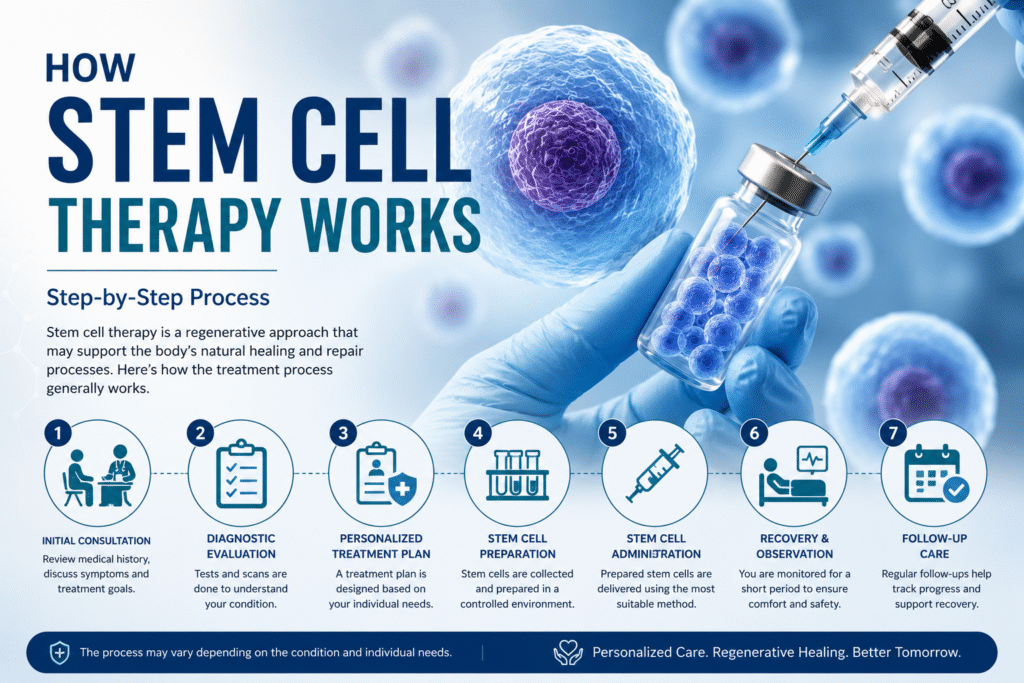
How Stem Cell Therapy Works: Step-by-Step Process
Introduction
Stem cell therapy is an area of regenerative medicine that is being studied for its potential to support the body’s natural healing and repair processes. Many patients are curious about what happens during treatment, how stem cells are prepared, and what to expect before and after the procedure.
This guide explains the typical stem cell therapy process step by step, helping you understand how treatment is generally planned and delivered.
Table of Contents
What Is Stem Cell Therapy?
Stem cell therapy is a medical approach that uses stem cells with the goal of supporting tissue repair and regeneration. Researchers are studying this therapy for a variety of neurological, orthopedic, autoimmune, and chronic medical conditions.
Treatment protocols vary depending on the patient’s condition, medical history, and the healthcare provider’s recommendations.
Step 1: Initial Medical Consultation
The journey begins with a comprehensive consultation.
During this appointment, your doctor will:
- Review your medical history
- Discuss your symptoms
- Examine previous treatments
- Review medical reports and scans
- Determine whether additional investigations are required
This evaluation helps determine whether stem cell therapy may be an appropriate option.
Step 2: Diagnostic Evaluation
Before treatment, doctors may recommend diagnostic tests such as:
- Blood tests
- MRI or CT scans
- X-rays
- Ultrasound
- Physical examination
- Neurological assessment (if applicable)
These tests help create a personalized treatment plan.
Step 3: Personalized Treatment Planning
Every patient is different.
Your medical team develops an individualized treatment plan based on:
- Your diagnosis
- Disease severity
- Overall health
- Age
- Previous treatments
- Treatment goals
A personalized approach helps ensure that care is tailored to your specific needs.
Step 4: Stem Cell Preparation
Depending on the treatment protocol, stem cells are prepared according to established medical and laboratory procedures.
The healthcare team follows strict quality and safety standards during the preparation process.
Step 5: Stem Cell Administration
Once the cells are prepared, they are administered using the method recommended for your condition.
Depending on the clinical situation, stem cells may be delivered through:
- Intravenous (IV) infusion
- Localized injection
- Other medically appropriate techniques
The administration method is selected by the treating physician based on the patient’s individual needs.
Step 6: Recovery and Observation
After the procedure, patients are usually monitored by the medical team.
Observation may include:
- Monitoring vital signs
- Assessing comfort
- Reviewing any immediate concerns
- Providing post-treatment instructions
The duration of observation varies depending on the treatment protocol.
Step 7: Follow-Up Care
Recovery continues after the procedure through regular follow-up appointments.
During follow-up visits, doctors may:
- Assess progress
- Monitor recovery
- Review symptom changes
- Recommend rehabilitation if appropriate
- Adjust the treatment plan when necessary
Regular follow-up plays an important role in ongoing patient care.
Conditions Being Studied with Stem Cell Therapy
Researchers are investigating stem cell therapy for several conditions, including:
- Parkinson’s Disease
- Stroke Recovery
- Multiple Sclerosis
- Autism Spectrum Disorder
- Spinal Cord Injury
- Osteoarthritis
- COPD
- Diabetic Foot Ulcers
- Liver Disease
- Kidney Disease
- Type 1 Diabetes
- Type 2 Diabetes
The level of scientific evidence differs across these conditions, and many applications remain under clinical investigation.
Potential Benefits Being Studied
Researchers continue to evaluate whether stem cell therapy may help:
- Support tissue regeneration
- Reduce inflammation
- Promote healing
- Improve blood circulation
- Enhance tissue repair
- Improve quality of life for selected patients
Results vary depending on the individual and the condition being treated.
Is Stem Cell Therapy Painful?
Most treatment procedures are generally well tolerated. Depending on the administration method, patients may experience mild discomfort during or after the procedure. Your healthcare team will explain what to expect and answer any questions before treatment.
Why Choose Stem Medica India?
At Stem Medica India, we provide patient-centered care supported by experienced medical professionals and advanced regenerative medicine practices.
Our approach includes:
- Personalized consultations
- Experienced healthcare specialists
- Modern medical facilities
- Individualized treatment planning
- Comprehensive follow-up care
- Compassionate patient support
Frequently Asked Questions
How long does stem cell therapy take?
The treatment timeline varies depending on the condition, evaluation process, and individualized treatment plan.
Can I return home the same day?
This depends on the treatment protocol and your doctor’s recommendation. Some patients may be discharged the same day, while others may require observation.
Is stem cell therapy suitable for everyone?
No. Eligibility depends on a detailed medical assessment and the nature of the medical condition.
When can I expect results?
Response to treatment varies from person to person and depends on factors such as the condition being treated, overall health, and ongoing medical care.
Conclusion
Understanding the step-by-step process of stem cell therapy helps patients make informed healthcare decisions. From the initial consultation to follow-up care, each stage is designed to support safe, personalized treatment planning. If you are considering stem cell therapy, consult qualified healthcare professionals to discuss whether it may be appropriate for your individual needs.
Book a Consultation
If you would like to learn more about the stem cell therapy process, schedule a consultation with the experienced medical team at Stem Medica India.