
Who Is a Good Candidate for Stem Cell Therapy?
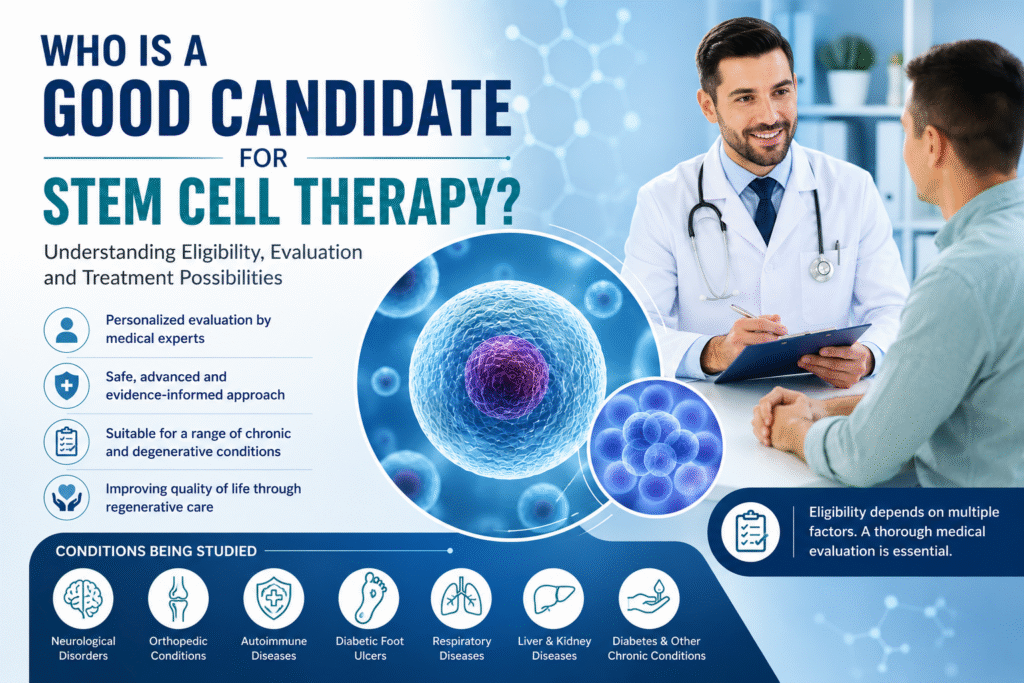
Stem cell therapy has gained significant attention in regenerative medicine for its potential to support the body’s natural healing processes. However, not every individual is an ideal candidate. Whether stem cell therapy is appropriate depends on several factors, including the medical condition, overall health, treatment goals, and a detailed evaluation by qualified healthcare professionals.
This guide explains who may be considered for stem cell therapy, the evaluation process, and what factors doctors review before recommending treatment.
Table of Contents
What Is Stem Cell Therapy?
Stem cell therapy is a regenerative medicine approach that uses stem cells to support tissue repair and healing. Researchers continue to study its potential applications across a variety of medical conditions.
Treatment plans are personalized based on each patient’s medical history and current health status.
Who May Be a Good Candidate?
Patients who may be evaluated for stem cell therapy include those with:
- Chronic orthopedic conditions
- Neurological disorders
- Autoimmune diseases
- Sports injuries
- Degenerative joint conditions
- Slow-healing wounds
- Certain chronic medical conditions being studied in regenerative medicine
Every case requires an individual medical assessment.
Medical Conditions Being Studied
Stem cell therapy is being researched for conditions such as:
- Parkinson’s Disease
- Stroke Recovery
- Alzheimer’s Disease
- Multiple Sclerosis
- Autism Spectrum Disorder
- Cerebral Palsy
- Spinal Cord Injury
- Osteoarthritis
- COPD
- Diabetic Foot Ulcers
- Liver Disease
- Kidney Disease
- Type 1 Diabetes
- Type 2 Diabetes
The strength of scientific evidence varies among these conditions, and many applications remain under clinical investigation.
Factors Doctors Consider
Before recommending stem cell therapy, healthcare professionals typically evaluate:
Medical History
Doctors review previous illnesses, surgeries, medications, and current health conditions.
Diagnosis
A confirmed diagnosis helps determine whether stem cell therapy may be appropriate.
Overall Health
General health, lifestyle, and existing medical conditions are important considerations.
Disease Severity
The stage and progression of the condition may influence treatment planning.
Previous Treatments
Your doctor will assess treatments you’ve already received and your response to them.
Treatment Goals
Patient expectations and desired outcomes are discussed to create realistic treatment objectives.
Who May Not Be an Ideal Candidate?
Stem cell therapy may not be appropriate for everyone.
Your doctor may recommend alternative treatment options if you have:
- Certain active infections
- Uncontrolled medical conditions
- Medical situations requiring immediate conventional treatment
- Other factors identified during your evaluation
Only a qualified healthcare professional can determine eligibility.
What Happens During the Evaluation?
The evaluation process may include:
- Medical consultation
- Physical examination
- Blood investigations
- Imaging studies (MRI, CT scan, or X-ray when required)
- Review of previous medical reports
- Discussion of treatment options
This comprehensive assessment helps create a personalized treatment plan.
Potential Benefits Being Studied
Researchers continue to investigate whether stem cell therapy may help:
- Support tissue regeneration
- Reduce inflammation
- Promote healing
- Improve blood circulation
- Support tissue repair
- Improve mobility in selected patients
- Enhance quality of life
Outcomes vary depending on the individual’s condition and overall health.
Questions to Ask Before Treatment
Before deciding on stem cell therapy, consider asking your healthcare provider:
- Am I a suitable candidate?
- What benefits may be expected?
- What are the possible risks?
- What alternative treatments are available?
- How many follow-up visits are required?
- What lifestyle changes should I make?
These discussions can help you make an informed healthcare decision.
Why Choose Stem Medica India?
At Stem Medica India, we focus on personalized patient care and comprehensive medical evaluations to determine whether stem cell therapy may be appropriate for each individual.
Our approach includes:
- Experienced medical specialists
- Personalized treatment planning
- Advanced regenerative medicine
- Modern medical facilities
- Comprehensive patient evaluation
- Ongoing follow-up care
Frequently Asked Questions
Can anyone receive stem cell therapy?
No. Eligibility depends on your diagnosis, overall health, and a detailed medical evaluation.
Does age affect eligibility?
Age is one of several factors considered. Your overall health and medical condition are often more important than age alone.
How is eligibility determined?
Doctors review your medical history, physical examination, diagnostic reports, and treatment goals before making recommendations.
Is stem cell therapy a cure?
Stem cell therapy should not be considered a guaranteed cure. Many applications are still being studied through ongoing clinical research.
Conclusion
Stem cell therapy may offer potential benefits for selected patients, but careful medical evaluation is essential before treatment. The best candidates are those whose condition, health status, and treatment goals align with an individualized care plan developed by experienced healthcare professionals.
If you’re considering stem cell therapy, consult the specialists at Stem Medica India to determine whether it may be an appropriate option for your needs.
Book a Consultation
Schedule a consultation with Stem Medica India to receive a personalized evaluation and learn whether stem cell therapy may be suitable for your condition.
Medical Disclaimer: This article is for educational purposes only. Stem cell therapy is an evolving field, and many applications remain under clinical investigation. Eligibility and treatment recommendations should always be determined by qualified healthcare professionals