Stem Cell Therapy for Autism in India: What Parents Should Know

If you are searching for stem cell therapy for autism in India, you are probably looking for a straightforward answer.
Is it actually available? Does it work? Is it safe? How much does it cost? And, most importantly, is it worth considering for your child?
These are reasonable questions.
Stem cell therapy has attracted a lot of attention in autism research, but parents need to separate research from established treatment. The two are not the same.
As of 2026, stem cell therapy is not an established routine treatment for Autism Spectrum Disorder (ASD) in India. The current Indian regulatory and legal position is particularly important: the Supreme Court of India has ruled that stem cell therapy for ASD cannot be offered as a routine clinical service outside an approved and monitored clinical-trial or research setting.
Is Stem Cell Therapy for Autism Available in India?
The short answer needs some context.
Stem cell research for autism is taking place, and researchers have investigated different cell-based approaches. But this does not mean that stem cell therapy has become a standard treatment for autism.
In January 2026, the Supreme Court of India considered the use of stem cell therapy for Autism Spectrum Disorder and concluded that it should not be offered as a routine clinical service outside an approved and monitored research or clinical-trial setting.
That distinction is easy to miss when searching online.
You may come across websites describing stem cell treatment for autism in India as if it were a regular medical procedure. Parents should not assume that an advertised treatment is automatically an approved treatment.
If someone is offering an experimental stem cell intervention, ask a very simple question:
“Is this being provided as part of an approved clinical trial or research programme?”
Ask for the documentation. Don’t rely only on a website, brochure or testimonial.
What Does the Research Say About Stem Cell Therapy for Autism?
This is where things get interesting.
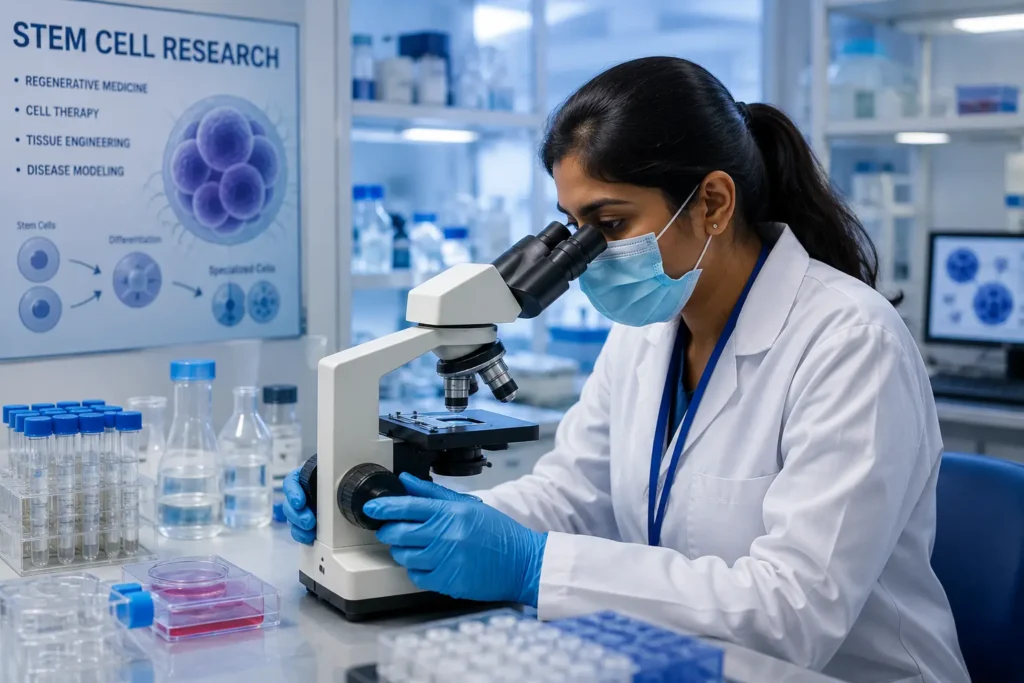
Researchers have been studying whether cell-based therapies could influence some of the biological processes associated with autism. Several studies have reported changes in certain clinical or behavioural measurements.
But research findings are not the same as proof that a treatment works.
The Indian Council of Medical Research reviewed the evidence surrounding stem cell therapy for Autism Spectrum Disorder and concluded that the available evidence does not support its use as a standard or routine treatment for ASD. ICMR recommends that therapeutic use should be restricted to appropriately approved clinical trials.
One published study, for example, looked at autologous bone-marrow-derived cells together with neurorehabilitation. The researchers reported improvements in several measured areas. However, the study design does not allow those findings to be treated as definitive proof that stem cells themselves caused the improvements.
That point matters.
Children participating in these studies may also receive rehabilitation, therapy and other forms of support. Researchers therefore have to work out how much of an observed change comes from the cell intervention and how much comes from other factors.
A newer observational study published in 2026 also reported improvements among patients who received an autologous bone-marrow mononuclear cell intervention. But because it was observational rather than a randomized controlled trial, it should not be presented as proof that stem cell therapy is an established treatment for autism.
Research is continuing. The evidence has not reached the point where parents should treat stem cells as a proven autism treatment.
Why Are Parents Interested in Stem Cell Therapy for Autism?
Because parents want their children to have every reasonable opportunity.
A child may struggle with communication, social interaction, sensory processing, learning or everyday activities. Families sometimes spend years trying different therapies and searching for new research.
That naturally creates interest in emerging treatments.
Stem cell research is particularly interesting because scientists are investigating whether cell-based approaches could affect biological mechanisms involved in autism.
But there is a difference between “researchers are investigating this” and “this treatment is proven to help children with autism.”
A responsible medical discussion should make that difference clear.
Who Should Be Considered for an Evaluation?
There should not be a simple checklist such as:
“Your child is between a certain age range, therefore they qualify.”
Autism is a spectrum, and children can have very different developmental profiles.
Before any experimental treatment is even discussed, a proper medical evaluation should look at the child’s individual situation.
That includes the child’s:
- Developmental history
- Autism diagnosis
- Communication abilities
- Behaviour and social interaction
- Existing therapies
- General medical history
- Current medications
- Other medical or developmental conditions
- Previous investigations where appropriate
- Family’s goals and expectations
The purpose of an evaluation should be to understand the child—not to find a reason to sell a treatment.
What Happens During an Autism and Stem Cell Therapy Evaluation?
A good consultation should feel like a medical assessment, not a sales presentation.
The doctor should first listen to the parents and understand what has been happening with the child.
The evaluation may involve reviewing:
1. Medical and Developmental History
The doctor looks at pregnancy and birth history where relevant, developmental milestones, previous diagnoses and current concerns.
2. Autism Diagnosis
The existing diagnosis should be reviewed rather than simply assumed.
3. Current Therapies
Parents should explain what the child is already receiving, such as speech therapy, occupational therapy, behavioural support or educational intervention.
4. General Health
The child’s overall health matters when considering any medical intervention.
5. Treatment Goals
What are the parents hoping will change?
Is the main concern communication? Behaviour? Daily living skills? Social interaction?
Being specific helps the medical team understand what the family is actually trying to achieve.
6. Discussion of Evidence
This is one of the most important parts.
Parents should be told what research supports, what remains uncertain and what has not been demonstrated.
7. Discussion of Risks
A treatment discussion should include possible risks and limitations—not just potential benefits.
8. Final Medical Decision
If the proposed intervention is experimental, the doctor should explain the appropriate research or clinical-trial pathway rather than presenting it as routine autism care.
How Much Does Stem Cell Therapy for Autism Cost in India?
This is one of the most searched questions—and one of the easiest areas for parents to get misleading information.
Search online and you will find websites quoting very different prices for autism stem cell treatment in India.
I would be careful with any article that simply gives you a number and calls it “the cost.”
Why?
Because there is no single standard routine stem cell treatment for autism in India.
The current legal position also matters. Since therapeutic stem cell use for ASD is restricted to an approved and monitored clinical-trial or research setting, the cost of a legitimate research intervention should not be confused with the price of a commercially advertised treatment package.
If someone gives you a treatment price, ask what the amount actually covers.
For example:
- Medical consultation
- Diagnostic evaluation
- Laboratory work
- Cell processing
- Hospital charges
- Administration procedure
- Rehabilitation
- Follow-up visits
- Travel or accommodation, if applicable
And ask one more question:
“What is the regulatory status of this treatment?”
That question is more useful than comparing two package prices.
How Should Parents Choose a Stem Cell Provider?
If you are considering an experimental treatment, don’t choose a provider because their website has the most impressive testimonials.
Look deeper.
Check the Medical Team
Find out who is responsible for the child’s medical assessment and treatment.
Look at qualifications, registration and relevant clinical experience.
Ask What Cells Are Being Used
“Stem cell therapy” is a broad term.
Ask:
What type of cells are being used?
Where do they come from?
How are they processed?
How are they administered?
A reputable medical team should be able to explain this in language parents can understand.
Ask for Published Evidence
Don’t settle for:
“We have treated hundreds of children.”
Ask for the actual research.
A testimonial tells you what happened to one family. A properly designed clinical study tells you much more about whether an intervention is likely to work more broadly.
Ask Whether It Is a Clinical Trial
This is especially important in India given the current legal position.
Ask for:
- Trial registration details
- Regulatory approvals
- Ethics committee information
- Informed-consent documents
- Study protocol information
Ask About Follow-Up
What happens after the intervention?
Who measures the child’s progress?
How long is follow-up?
What happens if the child develops a complication?
These questions are sometimes overlooked when families are focused on the treatment itself.
Don’t Stop Established Autism Support Because of Stem Cell Therapy
This deserves a very clear statement.
Stem cell therapy should not be presented as a replacement for established autism support.
Children with autism may benefit from different forms of developmental and supportive care depending on their individual needs.
That might include speech and language support, occupational therapy, behavioural interventions, educational support, parent training and other services.
The exact combination should be based on the child’s needs.
ICMR’s evidence review does not support adding stem cell therapy as a routine treatment for ASD.
So if your child is already receiving helpful support, don’t stop it simply because someone has recommended an experimental procedure.
Discuss major treatment changes with your child’s existing healthcare team.
What Should International Parents Ask Before Coming to India?
India attracts families from many countries for specialist medical care.
If you are travelling from outside India, your due diligence should start before you book a flight.
Ask the provider for written information about the proposed treatment.
Here are the questions I would ask.
1. What exactly is being proposed for my child?
Don’t accept a general description such as “advanced stem cell therapy.”
2. Is this part of an approved clinical trial?
Ask for the trial details.
3. What evidence supports the treatment?
Ask for published studies.
4. What are the known risks?
Ask for the risks in writing.
5. Who will treat my child?
Check the medical team’s qualifications.
6. How will improvement be measured?
A good study needs objective ways to measure outcomes.
7. How long will the follow-up be?
Don’t assume that a short-term change tells you what will happen months or years later.
8. What happens if there is a complication?
This is especially important if you are returning to another country after treatment.
9. What does the quoted cost include?
Get a written breakdown.
10. What happens if we decide not to proceed?
A good consultation should allow families to say no.
Is Stem Cell Therapy for Autism Proven?
No. Stem cell therapy is not currently established as a proven routine treatment for Autism Spectrum Disorder.
ICMR’s evidence review does not support routine clinical use for ASD, and the Supreme Court’s 2026 judgment states that therapeutic use cannot be offered as a routine clinical service outside an approved and monitored clinical-trial or research setting.
Research is still being conducted.
That means the subject deserves scientific attention—but parents should be cautious about websites that turn early research into guaranteed treatment claims.
Is Stem Cell Therapy for Autism Legal in India?
The important issue is how the treatment is being offered.
The Supreme Court of India ruled in January 2026 that stem cell therapy for ASD cannot be offered as a routine clinical service outside an approved and monitored clinical-trial or research setting.
Therefore, if a provider says they offer stem cell therapy for autism, ask them to explain the regulatory basis for the specific treatment being proposed.
Don’t assume that because a procedure is advertised online, it is automatically an approved routine medical treatment.
What Does Stem Cell Treatment for Autism Involve?
There isn’t one universal “stem cell treatment for autism.”
Different research studies have investigated different cell sources, preparation methods and routes of administration.
For example, published research has investigated autologous bone-marrow-derived cells administered alongside neurorehabilitation.
That doesn’t mean another clinic uses the same protocol.
So when someone says:
“We provide stem cell therapy for autism.”
The next question should be:
“Exactly what treatment protocol do you mean?”
Ask for the details.
What Risks Should Parents Understand?
One of the biggest mistakes parents can make is thinking:
“They are my child’s own cells, so there is no risk.”
That is not a safe assumption.
The risk depends on the cells used, how they are processed, how they are administered and the medical environment in which the procedure takes place.
There is also uncertainty around long-term outcomes because stem cell therapy for autism remains an area of research.
ICMR has recommended close monitoring of patients involved in clinical trials involving stem cell therapy for ASD.
A proper consent discussion should cover both potential benefits and possible harms.
If a provider spends twenty minutes talking about benefits and barely mentions risks, ask more questions.
Questions Parents Should Ask Before Making a Decision
Before paying for any stem cell intervention, sit down with the doctor and ask these questions:
Is this an approved treatment or experimental research?
What evidence supports it?
What type of cells will be used?
Where are the cells obtained from?
How are they processed?
How will the treatment be administered?
What are the known risks?
What results can realistically be measured?
How long will my child be followed?
What happens if there is no improvement?
What happens if there is a complication?
Can I take the information home and discuss it with another doctor?
That last question is surprisingly useful.
You should never feel pressured to make a major medical decision during the first consultation.
Frequently Asked Questions
Is stem cell therapy for autism proven?
No. Current evidence does not establish stem cell therapy as a routine, proven treatment for Autism Spectrum Disorder. ICMR recommends that therapeutic use be restricted to appropriately approved clinical trials.
Is stem cell therapy available in India?
Stem cell research can take place within the appropriate regulatory framework, but routine clinical use of stem cell therapy for ASD is not permitted outside an approved and monitored clinical-trial or research setting under the current legal position.
What does stem cell therapy for autism involve?
There is no single standardized procedure. Research has investigated different cell types, sources and administration methods. Parents should ask the provider for the exact protocol being proposed.
How much does autism stem cell treatment cost in India?
There is no single standard price for an approved routine autism stem cell treatment because stem cell therapy is not established as routine ASD care. Any quoted price should be checked carefully against the actual treatment, research protocol and regulatory status.
Who evaluates a child before treatment?
A child should receive an appropriate medical and developmental assessment before any experimental intervention is considered. The exact professionals involved depend on the child’s needs and the proposed research protocol.
What risks should families understand?
Risks depend on the specific cells, preparation, administration method and clinical setting. Families should receive a clear explanation of known risks, uncertainties and follow-up requirements before consenting.
Should parents stop speech or behavioural therapy before considering stem cells?
No. Stem cell therapy should not be treated as a replacement for established autism support. Parents should discuss any major change in their child’s care with their existing healthcare professionals.
Final Thoughts for Parents

Searching for stem cell therapy for autism in India does not make you an uninformed parent.
It means you are looking for options.
Just don’t let that search turn into pressure to make a decision before you understand the evidence.
Stem cell research is an interesting area of medicine, and researchers continue to study whether cell-based approaches could eventually have a role in autism care.
But today, the responsible approach is different from simply finding a clinic and booking a treatment.
Check the evidence. Check the regulatory status. Ask about the clinical trial. Understand the risks. And get enough information to make the decision without pressure.
For a child with autism, the goal should never be to chase the newest treatment simply because it sounds promising.
The goal is to choose care based on what we actually know.
Medical Disclaimer: This article is for educational purposes only and should not replace advice from a qualified healthcare professional. Parents should discuss their child’s individual condition and treatment options with an appropriately qualified medical professional.